

About Ayutthaya
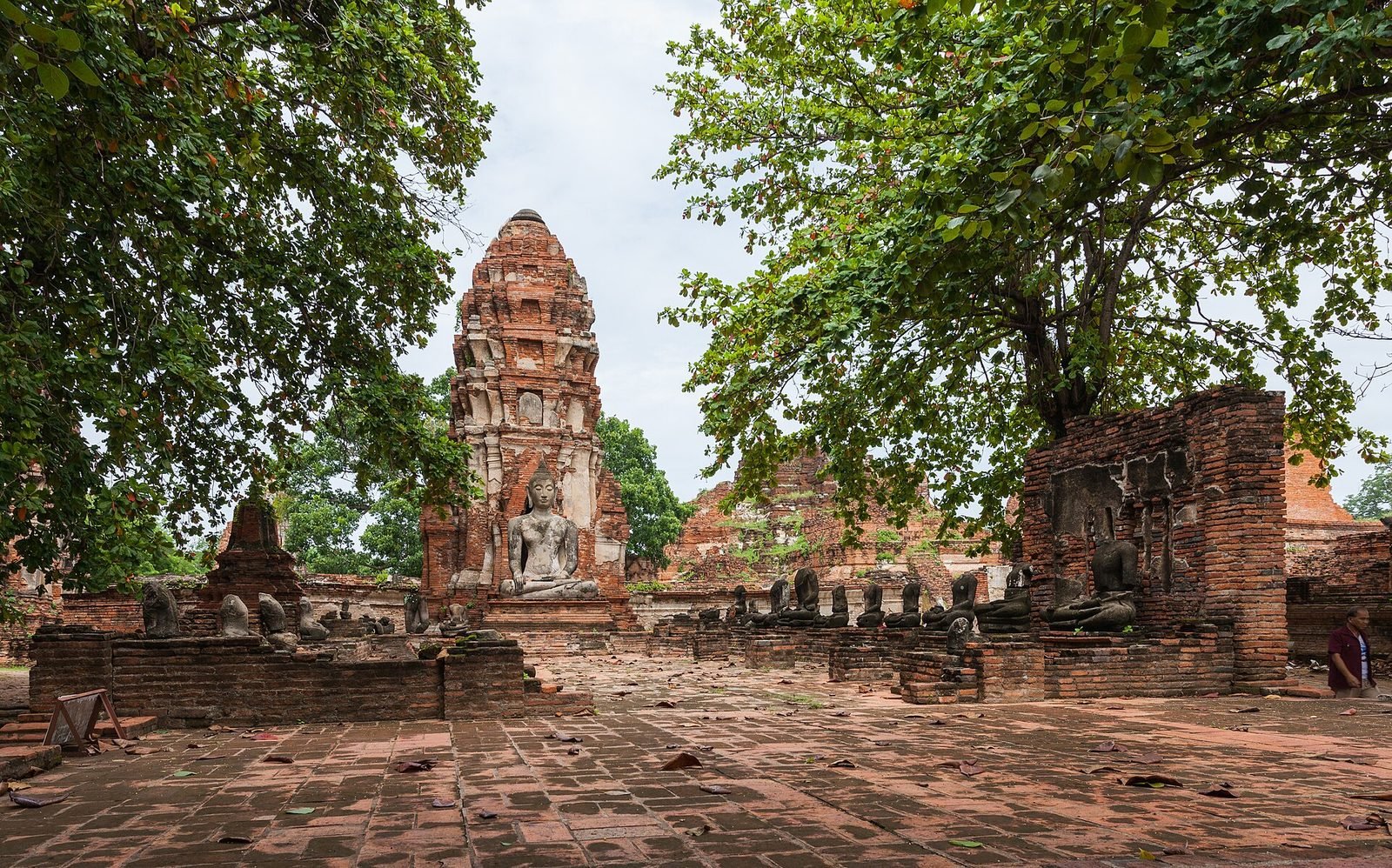
Ayutthaya sits on an island where the Chao Phraya and the Pa Sak rivers meet, about 85 km north of Bangkok. From the fourteenth to the eighteenth century it was the capital of the Ayutthaya Kingdom and grew into one of the largest cities in the world, until the Burmese invasion of 1767 destroyed much of it. What remains is protected in the Ayutthaya Historical Park, a UNESCO World Heritage Site: brick prangs, toppled Buddha images and temple walls among the grass. It is easy to explore by bicycle or tuk-tuk, and you can also see the ruins from a boat on the rivers. Evenings are especially pretty when the monuments are lit up. Many travellers come on a day trip from Bangkok, but staying overnight gives you more peace at the popular temples.
Best time to visit (indicative)
Best from November to February: dry and relatively cool. March to May is hot; June to October is the rainy season with the most rain around September. Ruins and markets are most pleasant early in the morning. Weather varies from year to year; this is a guideline based on the climate.
Getting there
From Bangkok by train (roughly 1.5 to 2 hours), minivan or bus; the temples are spread out, so rent a bicycle or tuk-tuk on arrival. Distances and travel times are rounded estimates.
Things to do in Ayutthaya
- Wat Mahathat Famous for the Buddha head entwined in tree roots, one of the best-known images in Thailand.
- Wat Chaiwatthanaram A Khmer-style riverside temple with a central prang and smaller towers, lovely at sunset.
- Wat Phra Si Sanphet The three large chedis stood within the former royal palace grounds and symbolise the city.
- Wihan Phra Mongkhon Bophit A large seated bronze Buddha in a working temple hall, right beside the historical park.
- Chao Phrom Market The market beside the Pa Sak is a good place for local snacks and everyday goods.
